Period windows are a different trade
A London glazing company that works on windows older than the regulations.
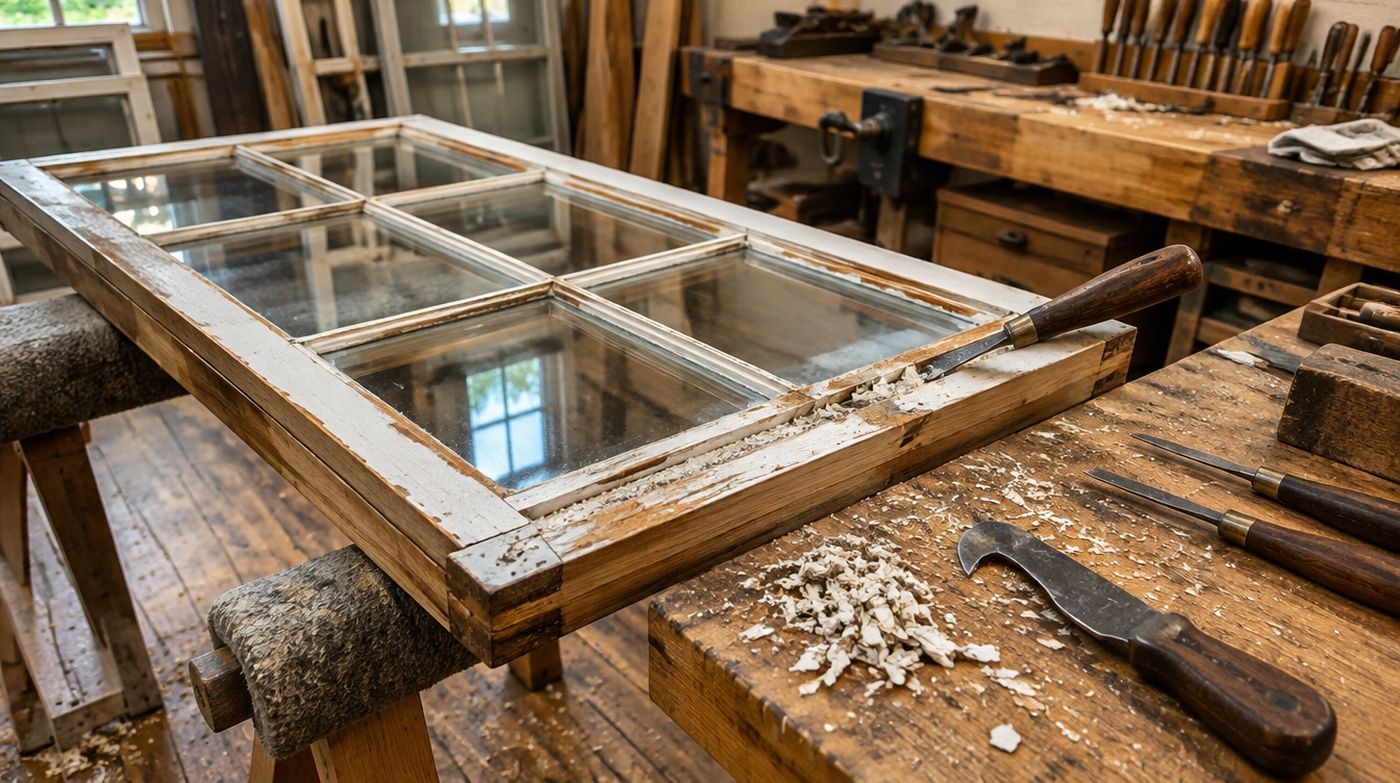
A glass workshop that happens to specialise in period windows
Sash Window Glass is the period and conservation side of a London glazing company with its own glass cutting and processing workshop at 6 Atlas Road, Wembley. We cut, edge, polish, toughen and laminate glass there, and we make up sealed units. That is an unusual combination for a firm doing conservation sash work, and it changes what we are able to offer on a period house.
Period windows are never standard sizes. A Georgian six-over-six has twelve panes and no two of them are quite the same once the sash has moved and been painted for two centuries. A bay has splayed lights that are not square. A staircase window has an arched head. Buying those in from a trade supplier means lead times, minimum order charges and templates travelling back and forth. Cutting them ourselves means we template on site, cut to the template, and if a pane is a millimetre tight we recut it that afternoon instead of losing a week and leaving your window boarded.
It also means we can take small work seriously. One cracked pane in a bedroom sash is a job we will do. So is a single toughened pane for a low window a surveyor has flagged on a homebuyer's report, and so are replacement sash window panes in drawn restoration glass for two lights of a bay.
What we do, and what we deliberately do not do
Our work is single pane replacement in timber sash and casement windows, slim double glazing in existing or new sashes, new sashes made to match existing profiles, draught proofing with cord, weight and pulley overhaul, putty glazing and re-puttying, restoration glass for lost panes, and secondary glazing where that is the better answer. We handle the glass and the glazing. On jobs needing serious joinery or structural frame repair we work alongside a joiner and say so in the quotation rather than pretending it is all one trade.
What we do not do on this side of the business is modern replacement windows in uPVC. If a 1990s uPVC window somewhere in the house has misted units, that is still glass work and a sister site of ours deals with it. Here we work in timber, in period rebates, on buildings where the facade matters.
FENSA, building regulations and the paperwork that actually applies
We are a FENSA registered installer, which matters where replacement windows are notifiable under the building regulations. Registered installers self-certify the work against the relevant standards and notify it, so you get a certificate rather than having to engage building control separately. It is worth understanding what that does and does not cover. FENSA registration is about building regulations compliance. It has nothing to do with planning permission, conservation area consent or listed building consent, which are separate regimes run by your borough and which registration cannot bypass.
On glass specification, a few provisions come up constantly in period houses. Approved Document K identifies critical locations where glass must be safety glass or small enough and thick enough to be treated as low risk: low-level glazing, glazing in and beside doors, and glazing people may walk into. Victorian and Edwardian ground floor sashes frequently have cills low enough to fall inside that definition, which surprises owners who assume an old window is exempt. Safety glass means toughened to BS EN 12150 or laminated to BS EN 14449, classified under BS 6206 Class A, B or C by the breakage test and the drop height it has to resist.
Where glass is also holding somebody back from a drop, as it can be in a French casement or a window with a very low cill at first floor level, BS 6180 barrier loading comes into it. That is a design calculation about imposed loads rather than a matter of simply choosing a thicker pane, and we will tell you when a window falls into it instead of guessing. Approved Document Q, on security, applies to new dwellings and conversions rather than to the refurbishment of an existing house, so it rarely bears on period sash work. Approved Document L applies to replacement windows and contains the provision for historic and traditional buildings that most conservation glazing relies on.
How to check your own timber before anybody quotes
You can do most of this yourself with a penknife and ten minutes, and it will tell you whether a quote you have been given is honest. Start at the bottom, because that is where water sits: the cill, the bottom rail of the lower sash, and the joints where that rail meets the stiles. Press the blade in at a shallow angle. Sound timber resists and the blade barely enters. Softened timber takes the blade with no effort and comes away in damp crumbs, very often behind paint that looks perfectly sound.
Then look for blistered or flaking paint in patches rather than overall, dark staining running downwards from a joint, open joints you can see a gap in, putty that has dropped out or cracked away from the glass, and any pane that buzzes when you tap the frame. From outside, check the underside of the cill for a drip groove that has been painted solid over the years, because a blocked drip is how water gets led back into the wall instead of falling off the front.
Rot in a bottom rail or a cill is normal and repairable. Splicing in new timber, or a resin repair where the loss is small and local, is routine work and far cheaper than a new sash. Rot through the stiles, the meeting rail and the joints all at once is a different conversation and replacement may be right. But if a quotation says all windows beyond repair and nobody put a blade into the timber while they were there, get another quotation.
How we survey and what our quotations say
Site surveys are free anywhere in London. We measure the windows rather than asking you to, we probe the timber, we look in at least one weight pocket, we record bar widths and sightlines, and we establish the consent position before we price anything. You then get a written fixed quotation rather than an estimate that moves.
The quotation itemises what a period glazing job actually consists of: the unit make-up where sealed units are involved, with pane thicknesses, cavity width, gas fill, spacer type and coating named; whether your existing sashes are being retained or replaced; what happens to the counterweights, cords and pulleys; whether the glass is bedded in putty or held with beads, and which side; the drainage detail at the base of the rebate; whether sashes are primed or fully finished; how many nights each opening is boarded; and how access is being achieved and who pays for any licence or parking suspension.
We also quote jobs we expect to lose, and we would rather lose them for an honest reason. If somebody has quoted you considerably less for slim double glazing in the same windows, ask them three questions: what is the overall thickness of the unit, are you machining the rebates, and what are you doing about the counterweights. The answers very often explain the whole difference in price.
Who turns up at the house
Our own installation teams, not subcontractors, and usually including whoever surveyed the job. That matters more on period work than on anything else we do, because the person who measured the rebate is the person who knows which pane looked fragile and which sash was already running badly. Sashes are labelled by room and elevation before they leave, beads are kept and reused where they are sound, and old glass taken out intact is yours if you want it, which more people want than you might expect.
One practical point about old paint. Paint layers on a pre-1960s window may well contain lead, so we do not dry sand or burn paint off inside anybody's house. Where paint removal is part of the work, the sashes come back to the workshop. If a contractor proposes to sand a Victorian sash down in your living room, that is a reason to stop and ask questions.
What we will not promise you
- That slim double glazing will match a modern sealed unit's thermal figures. It will not, and anyone saying otherwise has not read the data sheet.
- That your council will grant consent. The council decides. We will prepare the technical information and we will not pretend to know the outcome.
- That every original pane will survive removal. Old glass is brittle and some of it breaks however carefully it is handled. We work slowly and we tell you beforehand which panes worry us.
- That a sealed unit will never fail. Every sealed unit has a finite life and a slim unit in a period rebate is working harder than a standard one. Keep the paperwork and the manufacturer's terms.
- A firm price over the telephone for period work. We will talk through options and likely approaches on the phone gladly, and we will measure before we put a number in writing.
Workshop and office hours are Monday to Friday, 8am to 5pm, on 020 4634 6045. We work across Greater London and are strongest in the north, west and centre, which happens to be where a great deal of the capital's heritage sash window glass still survives.
Get an honest answer about your sashes
Send a photo of the window and the glazing bar layout. We survey across London and will tell you plainly what the window can take.