Ordering replacement panes for a sash window
Getting replacement sash window panes right is mostly measuring and specification. This page covers how to measure a rebate that is not square, which glass belongs in a period sash, and how multi-pane lights change the order.
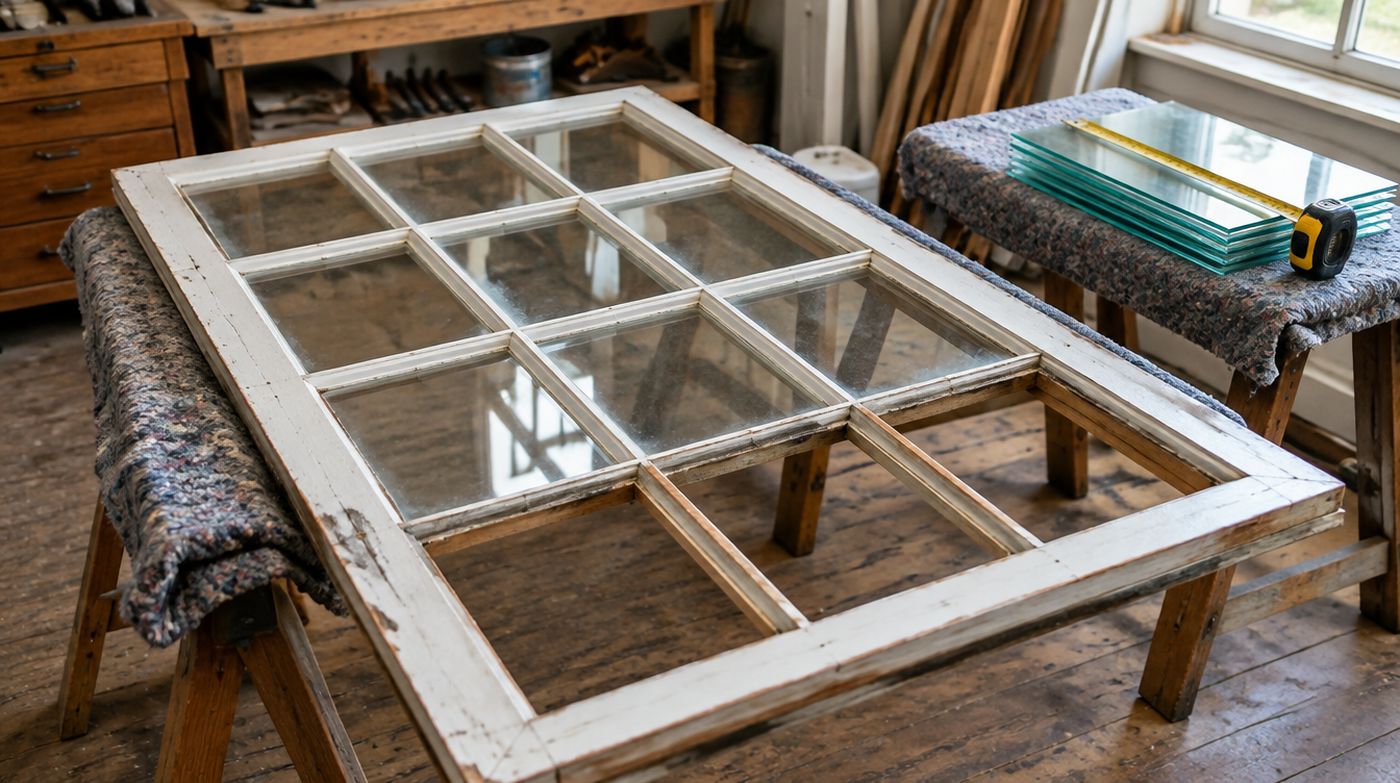
How to measure for replacement sash window panes
Measure the rebate, not the glass, and measure it with the old pane out if that is at all possible. The rebate is the shallow step cut into the sash that the glass sits in. What you want is the distance across the opening from the inside face of one rebate to the inside face of the one opposite, in both directions.
If the broken glass is still in place you can measure the visible pane and add the amount hidden under the putty on each side, which on a domestic sash is typically 3 to 5mm per edge. That is an estimate rather than a measurement, and it is by far the commonest reason replacement sash window panes turn up the wrong size.
Take three readings in each direction, at both ends and in the middle, and write down all six. Old sashes are not square and they have not been square for a long time. One width and one height is not enough information to cut glass from, and anybody who takes two numbers off your window and leaves is booking themselves a return visit.
Tight size, and why you take a couple of millimetres off
Glass is cut smaller than the hole it goes into. The trade term for the measured rebate opening is the tight size, and the cutting size is that figure less a clearance all round, usually a couple of millimetres off each overall dimension on a sash of ordinary size and more on a large pane.
The clearance exists because timber moves. A sash takes up moisture, the opening closes slightly, and glass cut to fill the rebate exactly has nowhere to go. The result is a pane in compression, which then cracks in a cold snap for no apparent reason, usually starting at a corner. A good proportion of the mysterious cracks we are called out to look at are glass that was cut too generously by somebody else years earlier.
Clearance also makes the pane fittable. You have to be able to introduce it at a slight angle, settle it into the back putty and centre it in the rebate. A pane that has to be forced in has been stressed before a scrap of putty has gone on the front of it.
When measuring will not do and you need a template
Some openings cannot be measured usefully at all. Arched heads, Gothic and segmental tops, margin lights with a cut corner, out of square openings in a settled building, and anything curved. For those you template: a piece of hardboard, card or thin ply cut and trimmed until it drops into the rebate with the right clearance, then marked for which face is outside and which way up.
Templating costs a visit and it is far cheaper than two wrong panes. It is also the only sensible approach on a Georgian or Victorian window that has moved over two centuries. If a supplier offers to cut an arched head from three dimensions given over the telephone, budget for the second attempt now.
We template as part of the survey wherever the shape warrants it and cut from that template in our own workshop. That removes the step where a template is posted to a third party and interpreted by somebody who has never seen the window, which is where most shaped glass goes wrong.
Which glass belongs in a period sash
For most replacement sash window panes in a London house the answer is 3mm or 4mm clear annealed float. Original glass is thinner than modern glass, often around 2mm, and 2mm clear is not practically available, so 3mm is the closest match where the pane is small and the bar is fine. 4mm is standard for larger panes and is what most Victorian two over two lights take.
Thickness is not a free choice on a sash window. The glass is part of the counterweight calculation. Going from 2mm original to 6mm because somebody assumed thicker was better adds real weight to a sash hanging on a pair of weights cast for the original glass, and the sash will no longer stay where you put it. On a large central London drawing room sash that effect is significant and the weights have to be adjusted to suit.
Where the window is visible and historic, restoration glass with deliberate distortion is the sympathetic option and salvaged old glass is better still. The identification and conservation side of that we cover properly on our heritage glass page rather than repeating it here.
Toughened, laminated, and where you actually need them
Approved Document K sets out critical locations where glazing must be safety glass or otherwise protected. Broadly that means glazing in a window below 800mm from floor level, and glazing in and beside doors below 1500mm. A sash with a low cill in a ground floor front room can easily put its bottom pane into that zone, and so can a window on a stair.
In those positions the glass needs to meet the relevant impact classification, which in practice means toughened to BS EN 12150 or laminated to BS EN 14449, satisfying BS 6206 Class A or its current equivalent. Toughened is cheaper. Laminated is usually the better choice in a period window for three reasons: it can be cut, so a template error is not a scrapped pane; it does not carry the faint roller wave distortion that toughened picks up in the furnace, which shows badly in raking light on an elevation of old glass; and if it breaks it stays in the frame instead of dropping out as granules.
Outside a critical location you need neither, and this is where money gets spent for nothing. A pane in the top sash of a first floor bedroom has no safety glass requirement whatsoever. If a quotation specifies toughened for every pane in the house, ask which ones are critical locations and why the others are specified that way. Laminated for acoustic reasons on a busy road is a real argument and we make it ourselves. Toughened everywhere by default is a markup.
Matching obscure and textured glass
Bathroom and stairwell sashes, and the margin lights on Edwardian houses, often hold patterned glass, and matching it is the hardest part of this job. Hundreds of patterns were rolled over the last century and most are long out of production. Current ranges cover a handful of the common ones, so a reeded or fluted glass, a small scale stipple or an arctic type pattern can usually be matched closely enough. A great many of the older patterns cannot be matched at all.
The useful move is to get the pattern identified before deciding anything. Photograph it straight on with a ruler in the frame for scale, then take a second shot with light behind it, and we can tell you whether it is a current pattern, a discontinued one we may hold in salvage, or something genuinely unobtainable.
When it is unobtainable there are three honest options. Find it in salvage and accept a pane with its own history and its own slight imperfections. Use the nearest current pattern and accept a visible difference. Or move the existing patterned glass to the pane that matters most and put the near match where it is least seen. Pattern direction matters as well, because rolled patterns are directional and a pane fitted with the reeds running the wrong way reads as a mistake even to somebody who could not say why.
What is not an honest option is an adhesive film sold as a match for rolled glass. It does not survive in a bathroom and it does not look like glass.
Multi-pane lights, Georgian bars and keeping the pattern
A six over six Georgian sash is twelve separate panes in twelve separate rebates, and the bars between them are structural as well as decorative. Replacing one pane in that arrangement is careful work for the reasons set out on our glass replacement page, because the vibration from hacking out putty travels along the bar into the glass you are keeping.
Where it affects ordering is that the panes in a multi-pane light are not identical. They differ by a millimetre or two because the bars were never perfectly spaced, so each pane has to be measured individually and marked to its position in the light. Twelve panes ordered as twelve of one size will fit eight openings and fight the other four.
If the bars themselves are damaged, or if somebody has previously fitted one large pane and stuck surface bars onto it to fake the pattern, that is a joinery decision before it is a glass decision. Applied bars on the outside face of a single pane look wrong from the pavement because the shadow is wrong and there is no putty line interrupting the reflection, and no glass specification will fix that. Proper bars with individual panes, or a unit with bars bonded to both faces and a matching spacer bar inside the cavity if it is double glazed, are the two defensible ways to do it.
Ordering the glass yourself: when that works
For a simple rectangular pane in a sash you can take out and lay on a bench, buying glass cut to size and glazing it yourself is entirely reasonable, and we will cut it for you over the counter at the Wembley workshop. Bring the sash, or bring a template and your six measurements, say what the glass is going into, and take away a pane with arrissed edges.
Where it stops being sensible: anything in a critical location, where the specification matters and the glass cannot be cut once it has been processed; anything shaped; anything patterned that needs identifying first; anything large enough to be a two-person lift up a staircase; and any window where the condition of the timber is in question. In all of those the glass is the small part of the cost, and a cheap pane bought well does not help you.
There is also something worth saying about the cheapest quotation. A pane of clear float glass is a commodity and nobody has a secret source for it. If one price is far below the others for the same specification, the difference is in the labour, and in practice that means the putty not being raked out properly, the rebate not being primed, the painting not being included, or the second visit not happening at all.
The specification we would want to see on your order
Whether you order from us or from somebody else, a clear order for replacement sash window panes should state the pane position and reference, the tight size in both directions with all three readings where the opening is irregular, the cutting size after clearance, the thickness, the glass type including whether it is annealed, toughened or laminated and to which standard, the edge finish, the pattern name and the direction of the pattern if it is obscure glass, and which face is the outside.
If the paperwork you are handed has one size on it and the word glass, nobody has thought about your window, and you are the person who finds that out on the second visit.
FAQ
Questions about replacement sash window panes
How do I measure a sash window pane for replacement glass?
Measure the rebate opening, not the visible glass, and ideally with the broken pane removed. Take three readings across the width and three up the height, at both ends and in the middle, because old sashes are rarely square. That measured figure is the tight size. The glass is then cut smaller than it, typically a couple of millimetres off each overall dimension, so the pane can be fitted and so the timber can move without putting the glass into compression. If the old pane is still in, add roughly 3 to 5mm per edge for the part hidden under the putty, and treat that as an estimate.
Can you match old patterned or obscure glass in a sash window?
Sometimes exactly, often closely, occasionally not at all. Hundreds of rolled patterns were produced over the last century and most are discontinued, while current ranges cover a handful of the common types such as reeded, fluted and small scale stipples. Photograph the pattern straight on with a ruler for scale and again with light behind it, and it can usually be identified. If it is unobtainable, the choices are salvaged glass, the nearest current pattern, or moving your existing pane to the most visible position. Watch pattern direction too: reeds running the wrong way read as a mistake immediately.
What thickness of glass goes in a sash window?
Usually 3mm or 4mm clear float. Original glass is often around 2mm, which is not practically available now, so 3mm is the closest match for small panes with fine bars, and 4mm suits the larger panes in Victorian two over two sashes. Thickness is not a free choice, because the glass forms part of the counterweight balance. Fitting 6mm where 2mm came out adds weight the cast weights were never sized for, and the sash will not stay up where you leave it. Where safety glass is required in a critical location, laminated at 6.4mm is common and the weights are adjusted to suit.
Get an honest answer about your sashes
Send a photo of the window and the glazing bar layout. We survey across London and will tell you plainly what the window can take.