Sash window glass across London, and what each part of the city throws at you
We cut and fit sash window glass London-wide from our own workshop in Wembley. What changes from one borough to the next is not really the glass. It is the building it has to go into and how you get to it.
Sash window glass London-wide starts with the housing stock
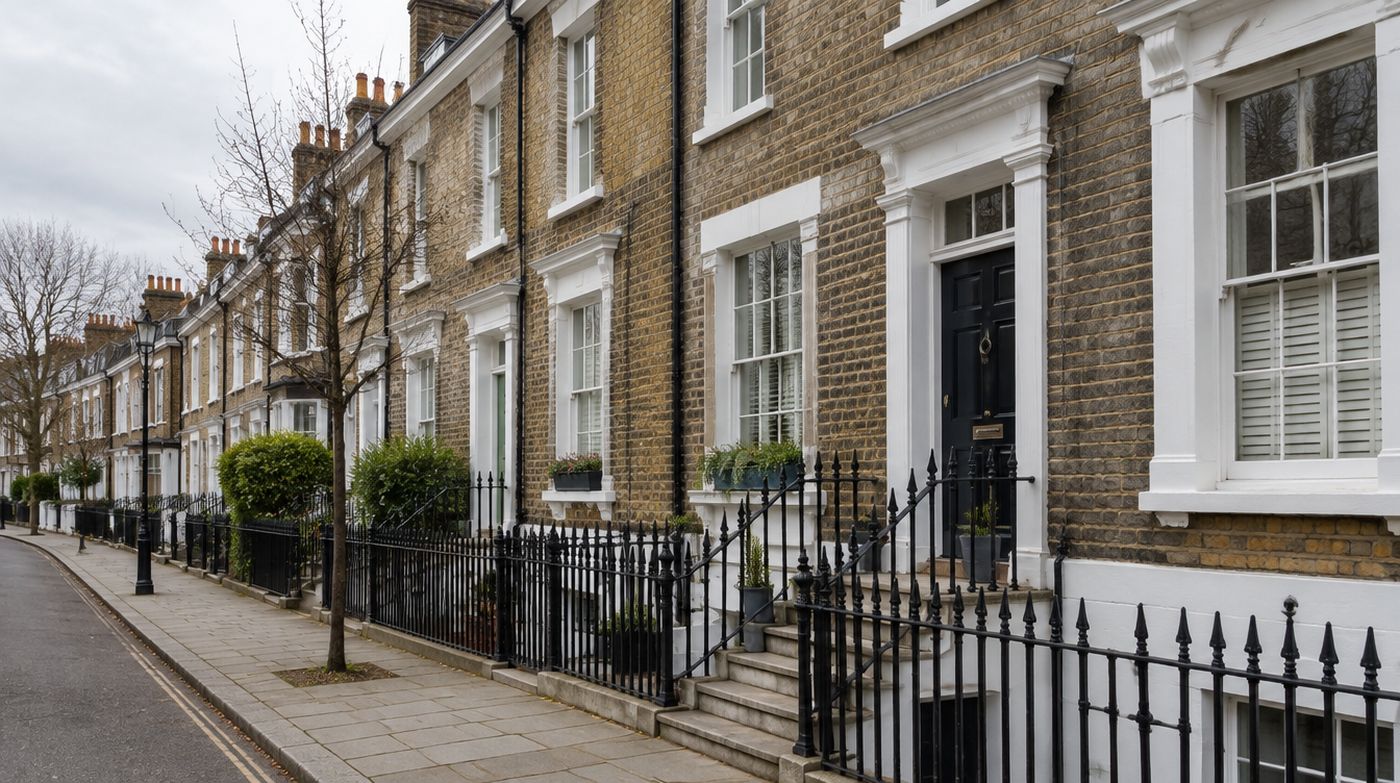
Pricing sash window glass London-wide is less about the glass than about the age of the house it belongs to, because the city was built in waves and each wave used a different window. Georgian and early Victorian houses have small panes, fine bars, crown or cylinder glass and often six over six lights. Mid to late Victorian houses have two over two or one over one sashes with large panes and horns on the sashes to carry the extra weight. Edwardian houses typically have a multi-pane top sash over a single lower pane, drawn sheet glass, and frequently coloured or textured margin lights. Interwar houses have casements as often as sashes, and steel as often as timber.
That matters because the pane size, the rebate depth, the bar thickness and the realistic glass options are all set by which wave the house belongs to, before anybody opens a tape measure. A quotation produced without knowing which of those you have was produced from a price list rather than from a survey.
North west London and the terrace belt
Our workshop is on Atlas Road in Wembley, so north west London is where we are strongest and where we get to fastest. Willesden, Kensal Rise, Queen's Park, Kilburn, Cricklewood, Harlesden and the Brent and Camden borders are mile after mile of late Victorian and Edwardian terrace, a great deal of it still holding original sashes behind seventy years of paint.
The practical character of the work here is narrow streets, controlled parking, no side access and front elevations that come straight onto the pavement. A sash taken out of a first floor front bedroom comes down through the house, which means dust sheets along a hall and a staircase and somebody being at home. Rear elevations are usually reachable through the house or from a side return, which is why rear work is often cheaper than front work on exactly the same building.
Flat conversions dominate here and they create a specific problem. The window usually belongs to the freeholder and the lease says so, even though the person living with the draught is the leaseholder. More on that below, because it is the commonest wasted expense on this job in London.
West and central London: stucco, big sashes and estate rules
Kensington, Notting Hill, Bayswater, Maida Vale, Pimlico, Belgravia and Marylebone. Tall stucco fronted terraces with very large sashes, sometimes several metres of window in a first floor drawing room, often with margin glazing and occasionally with original polished plate still in them.
Three things change in this part of London. The panes are big and heavy, so moving glass stops being a two-person carry up a staircase and starts needing planning. The counterweights that balance a large sash are substantial, so any change in glass thickness changes the balance, which is a genuine engineering consideration rather than a detail to be sorted out at the end. And many of these streets sit on managed estates with their own rules about materials, paint colour and glazing pattern, which are separate from the council's position and frequently stricter.
Central London also means loading restrictions, red routes, limited unloading hours and congestion and emission charges. All of that is real cost. The honest version is that it appears in the quotation under access and parking rather than being buried in the price of the glass.
Georgian pockets and the hill villages of north London
Islington, Canonbury, Barnsbury, Highbury, parts of Hackney, and up the hill to Highgate, Hampstead and Muswell Hill. Here you find the earliest surviving domestic sashes we see, with slender bars, deep boxes and glass that is genuinely eighteenth or early nineteenth century.
The work is slower and the right answer is more often to do less. Bars this fine cannot carry a sealed unit without being remade thicker, which changes the facade permanently. Original crown and cylinder glass in these windows is the primary consideration rather than a nice-to-have. We frequently recommend repair, draught proofing and secondary glazing in these houses, and we will decline to put slim units into a front elevation where the bars would have to be rebuilt to take them.
Access here is awkward in a different way to the terraces: hill streets, basements with front lightwells that rule out ladder positions, and long front gardens that put upper floor windows further out of reach than a flat fronted terrace does.
South London: late Victorian and Edwardian, and a great deal of it
Clapham, Balham, Tooting, Brixton, Herne Hill, Peckham, Forest Hill, and out through Wandsworth and Lewisham. Mostly later than the inner north and west, which generally means bigger panes, drawn sheet or early float glass, and sashes with horns.
Technically this is the most straightforward sash glazing in London. Fewer fine bars, deeper rebates, replaceable glass, and houses with side returns and rear gardens that make external access from ground level possible. It is also where we most often find the original glass has already gone, which removes one of the hardest judgments from the job.
We cut and fit sash window glass across south London and we are happy to quote. We will also say plainly that we are further away from it. A single small pane south of the river is a job we would rather combine with other work in the area than charge a full visit for, and if the price only makes sense as part of a larger job we would sooner tell you that than pad the number.
Outer London: 1930s semis, steel casements and windows that are not sashes
In Harrow, Pinner, Ruislip, Enfield, Bexley, Bromley, Sutton and the outer ring generally, the interwar semi is the dominant stock, and a large share of those houses never had box sashes at all. They had timber casements, steel Crittall casements with leaded or textured lights, or horizontal sliding sashes.
We do that work. Steel casement glazing is its own skill: the rebate is shallow, the glass sits in metal with a specific putty, and the frames are commonly out of true after ninety years of paint and corrosion, so templating beats measuring. Timber casements are straightforward but the pane sizes are odd and rarely repeat, so each one is measured individually.
What is not our work is a misted sealed unit in a uPVC frame, which is what a great many of these houses now have. That is a volume trade with different gaskets, different fittings and much lower prices than a period glazing workshop can sensibly offer, and it is handled by a sister operation rather than here. If you have uPVC you want the people who fit fifteen of those a day, not us.
Access, parking and the half of the quotation nobody itemises
On a London sash job the access arrangements can cost more than the glass. The questions that decide it are whether the sash can be worked from inside, whether there is a safe ladder position, whether there is anything below such as a basement lightwell or a conservatory roof, whether there is off-street parking or a bay that needs suspending, and whether the street is in a permit zone with waiting restrictions during working hours.
Scaffolding is the expensive answer and it is very often unnecessary. A first or second floor sash in a terrace can usually be taken out from inside and glazed on a bench in the room, which removes the need for any external access at all. If a quotation includes scaffolding or a tower for a single pane, ask specifically why internal removal will not work. Sometimes there is a good reason: a fixed light that does not open, or a sash painted shut beyond recovery. Often there is not, and you are being asked to pay four figures for a hire that nobody needed.
The other thing worth doing before anybody visits is checking whether a parking bay suspension will be needed, because councils want notice and the lead time varies between boroughs. It is a small piece of administration that stops a glazing visit being wasted.
Who to ask for permission before you pay for anything
Planning and conservation consent is covered on our home page, so briefly: whether you need it depends on the building and the area, and changing glazing on an unlisted house in a conservation area is not always controlled, while on a listed building it almost always is.
What gets forgotten is the private side of permission. In a London flat the windows are usually demised to the freeholder and the lease will state who may alter them and to what specification. On managed estates in the west and central boroughs there is an estate specification as well as the council's. In a mansion block there is a managing agent, often a rule about external appearance applying across the whole block, and sometimes a restriction on which lift may be used and when materials may be brought in.
Settle that before you commission a survey, not after it. The most common piece of wasted expenditure on this work in London is a leaseholder paying for a survey and a quotation for a window they turn out not to be permitted to alter.
Where we are honestly not the right call
We are a glass workshop that specialises in period windows, with our own cutting, edging, toughening and laminating at Atlas Road in Wembley and our own fitting teams rather than subcontractors. That is a good fit for a cracked pane in a Victorian sash, a matched reproduction in a Georgian light, acoustic laminate inside a slim unit on a main road, or steel casement reglazing anywhere we can reach.
It is a poor fit for whole-window replacement in modern frames, for uPVC of any kind, and for one small pane a long way outside our area where the travelling is most of the price. In each of those cases somebody else is better placed, and we would rather say so on the telephone than send a surveyor out to tell you in person.
Free site survey across London, written fixed quotations, FENSA registered, Monday to Friday 8am to 5pm on 020 4634 6045.
FAQ
Questions about sash window glass london
Do you replace sash window glass across all London boroughs?
We cover Greater London and we are strongest in north, west and central London, working out of our own workshop at Atlas Road in Wembley. North west London is where we get to fastest. South and far outer London we cover and quote for, but we will be straight about distance: a single small pane a long way out is a job we would rather combine with other work in that area than charge a full visit for. If the economics do not work, we say so rather than inflating the price, and we will often suggest somebody closer.
Will you need scaffolding to replace glass in a London terrace?
Usually not. A sash on the first or second floor of a terrace can normally be removed from inside and glazed on a bench in the room, which removes the need for external access altogether. Scaffolding or a tower is genuinely needed where a light is fixed and does not open, where a sash is painted irretrievably shut, where there is a basement lightwell or a conservatory roof below with no safe ladder position, or on very large sashes at height. If a quotation includes access equipment for one pane, ask directly why internal removal will not work.
Who do I need permission from for new glass in a London mansion block?
Probably more parties than you expect, and the council may be the least of them. In most London flats and mansion blocks the windows are demised to the freeholder, so the lease governs what a leaseholder may alter and often specifies materials and appearance. There will usually be a managing agent to apply to, and blocks commonly impose a single external specification so that one flat cannot change the elevation. There may also be rules on lift use and delivery hours. On top of that sits any conservation area or listed building consent. Check all of it before paying for a survey.
Get an honest answer about your sashes
Send a photo of the window and the glazing bar layout. We survey across London and will tell you plainly what the window can take.