Repairing sash window glazing without replacing the glass
Most of what goes wrong with the glazing in a sash window is a putty, bead or frame fault rather than a glass fault. This page is about telling them apart and fixing only the ones worth fixing.
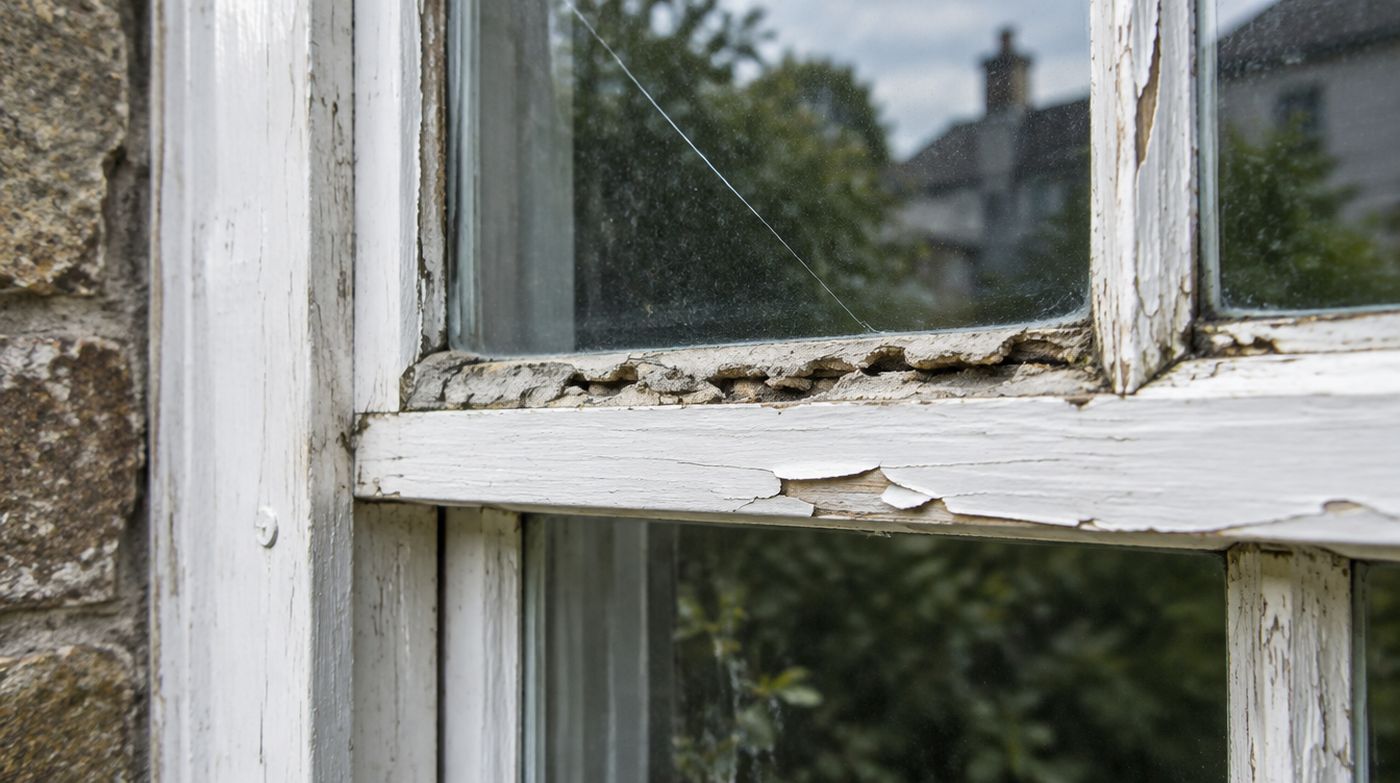
Most sash window glazing repair needs no new glass
When people ring about sash window glazing repair they usually describe a symptom rather than a cause: water sitting on the sill, a draught at the glazing bar, a pane that moves if you press it, a crack that appeared during a cold snap. In the large majority of those cases the glass is intact and doing its job, and the failure is in the material holding it in place.
Putty is a consumable. It has a service life measured in decades rather than centuries, and on a south or west facing elevation in London it is always the first thing to go. That is good news on cost, because reputtying a light is labour, a kilo of linseed putty and a pot of paint. Reglazing is labour, glass, and the real risk of breaking the panes you intended to keep.
A diagnostic walk round your own windows
You can do most of the diagnosis yourself in half an hour with a torch and a pencil, inside and out, and you will have a much better conversation with anybody who quotes afterwards.
From outside, look along the putty line at a shallow angle rather than straight at it. Sound putty is a continuous firm bevel with the paint lapped a couple of millimetres onto the glass. Failed putty shows as a hairline gap between putty and glass, crazing across the face of the bevel, short sections missing altogether, or putty gone pale and chalky that crumbles under a fingernail. Note which elevations are worst, because that tells you about exposure rather than about the quality of the original work.
From inside, press gently on the middle of each pane with the flat of your hand. A pane that ticks or shifts against the rebate has lost its back putty. Run a fingertip round the inside edge of the rebate feeling for a cold line of air. Then look at the glass itself against a dark background for cracks, and mark each crack end with a pencil dot on the timber so that in six months you can see whether it has travelled.
Last, look hard at the bottom rail and the lower corners of each sash. Flaking paint and a dark bloom in the timber there is the fault that decides whether any glazing repair on that sash is worth buying at all.
Cracked but stable, cracked and moving
Not every crack needs action. A single clean crack running from a corner to an edge, in a pane that is not in a critical location, has not dropped out of plane and is not letting water in, can reasonably be left under observation. Pencil the ends. If the dots are still at the ends of the crack half a year later, the pane is stable and your money is better spent elsewhere.
The ones that need dealing with are different: cracks that have branched into two or three lines, cracks where the two faces are no longer flush so you can feel a step with a fingernail, any crack in a pane low enough to count as a critical location under Approved Document K, and anything in a bathroom or on a stair where somebody could fall against it. Those are replacements rather than repairs, and no filler, resin or tape makes them safe.
On the products sold for this, briefly and bluntly: the crack repair resins made for car windscreens are for laminated automotive glass and do nothing useful on annealed window glass sitting in a timber rebate. Clear tape on the inside face is a reasonable way to hold a cracked pane together until it can be dealt with properly. That is the whole of its usefulness.
Failed putty is the commonest repair of all
Putty fails for three reasons and you can usually tell which one you are looking at. Paint that was never lapped onto the glass lets water straight into the joint, so the putty fails from the glass edge inwards. Putty that was painted before it had cured cracks across the bevel in a fine network like dried mud. Putty that was simply never repainted for thirty years dries out, shrinks and parts cleanly from the glass along its whole length.
The repair is to cut out the failed sections back to sound material, prime any bare timber, reputty, let it skin, and paint with the paint lapped onto the glass. The judgment is how much to cut out. Chasing out an entire light because one 200mm section has gone is wasteful and puts the glass at risk for no reason. Leaving a short soft section next to new putty means being back in two years. Putty that is firm, adhering and painted should be left where it is and overpainted.
Where somebody has filled failed putty with decorator's caulk or silicone, which is extremely common on London sashes, all of it has to come out. Neither sticks to glass for long, neither takes paint properly, and silicone leaves a residue on the timber and the glass that stops new putty bonding. That is an awkward conversation to have on a survey, because it means the cheap fix somebody paid for has made the proper repair more expensive.
Glass that has gone loose in the rebate
A pane that rattles when you tap the frame has usually lost its back putty while the front bevel still looks acceptable from the street. The glass is then held only by the front putty and the sprigs. That is enough to keep it in the window and nowhere near enough to keep water out or stop the pane flexing in wind.
This cannot be fixed by adding putty on the outside, which is what most people try. The glass has to come out, or at least be eased forward, the rebate cleaned and primed, and a fresh bed laid behind it. If the pane is original glass worth keeping, the entire point of the operation is to get it out in one piece, which is slow careful work and is priced as such. If it is a modern float pane, taking it out and fitting a new one is sometimes cheaper than saving it, and we will tell you which side of that line your window sits on.
Rattle, and why it is almost never the glazing
Rattling sashes are the complaint we hear most often, and the glazing is rarely the cause. A box sash rattles because the sash has become a loose fit in its box. The parting bead has worn thin or been replaced with something undersized. The staff bead has been nailed back in the wrong position after someone else's repair. Or the sash has dropped on slack cords so the meeting rails no longer close against one another.
The fixes are bead adjustment, a new parting bead, brush seals routed into the beads, or getting the cords and the counterweights right so the meeting rails actually meet. None of it involves glass. If somebody looks at a rattling window and quotes you for reglazing, you have the wrong trade standing in your house.
The same goes for the whistle people hear in a wind. That is air moving through a gap under pressure, and the gap is nearly always at the meeting rail or where the sash runs against the pulley stile, not at the putty line.
Beads instead of putty, and when that is the right repair
Not every sash was puttied. Some were glazed with a small timber bead pinned into the rebate, and most sashes converted to sealed units are. There is a long running argument in the trade about which to use when reglazing, and the honest answer depends entirely on what is going into the rebate.
Single glass in a traditional sash belongs in putty. It is what the rebate was cut for, it gives the thin dark line the elevation was designed around, and it can be repaired in short sections indefinitely. A sealed unit should not sit in putty alone. It wants bedding on a compatible sealant and holding with a bead, because a unit standing in a rebate that gets wet will fail at its edge seal. A bead can be made and painted to read as a putty line from the pavement, which is the compromise most conservation officers will live with.
Where it goes wrong is a bead pinned straight over failed putty to avoid the work of cutting it out. It looks finished the day it is done, it traps the water that was already getting in, and the rot underneath carries on quietly for years.
Repairs that are false economy
If a screwdriver sinks into the bottom rail, no glazing repair on that sash is worth buying until the timber has been dealt with.
Beyond that: reputtying a sash whose joints have opened so far that the frame racks when you lift it; repairing the glazing on a window you already know is being replaced within a couple of years for other reasons; paying for a full reputty of every elevation when only the south and west have failed; and having an original pane replaced because of a chip in a corner that sits under the putty and will never be seen by anyone.
One more that costs people real money: do not pay a period sash premium for glazing repair on a window that is not a sash. Steel Crittall casements and timber casements have shallower rebates and their own glazing method, which we do and price differently, and sealed units in uPVC frames are somebody else's trade entirely. We send that work to a sister operation rather than pretending it suits a period glass workshop.
What a repair visit will not fix
A glazing repair makes a window weathertight and structurally sound. It does not make the room warm, it does not make it quiet, and it does not make a dropped sash run properly again. Those are draught proofing, secondary glazing, and cord and balance work, and in any honest quotation they appear as separate lines with separate prices so that you can choose.
It is also worth knowing what you are buying in time. Putty cut properly and painted properly should go twenty years or more before it needs attention again, and it is the painting that decides that, not the putty. A good repair followed by no maintenance paint is a repair with a five year life, and that is the single most common reason we are called back to windows that were done correctly the first time.
FAQ
Questions about sash window glazing repair
Can a cracked sash window pane be repaired without replacing the glass?
Not really repaired, but often safely left. A single stable crack in a pane that is not in a low-level critical location, where the two faces are still flush and no water is getting in, can be monitored rather than replaced. Mark the crack ends with a pencil and check in six months. If it has branched, if you can feel a step across it, or if the pane sits below about 800mm from floor level, it needs replacing. Windscreen resins do not work on window glass, and tape on the inside is a temporary measure to hold the pieces together, nothing more.
Why does my sash window rattle, and is it the glass?
Almost never the glass. A box sash rattles because it has become a loose fit in its box: a worn or undersized parting bead, a staff bead nailed back in the wrong place, or sashes that have dropped on slack cords so the meeting rails no longer close tightly. Occasionally a pane has lost its back putty and ticks against the rebate when you press it, which is a glazing repair, but it sounds different and you can find it with a hand. If a quotation for a rattling window is for reglazing, ask why the beads and the cords have not been assessed first.
How do I know if my window putty needs replacing?
Look along the putty line from the side rather than straight at it. Sound putty is a firm continuous bevel with paint lapped a couple of millimetres onto the glass. It needs attention if there is a hairline gap between putty and glass, if the bevel is crazed in a fine network, if sections are missing, or if it has gone pale and chalky and crumbles under a fingernail. Then press each pane from inside: movement means the back putty has failed, which matters more than the front. Not every length needs cutting out, and firm painted putty should simply be overpainted.
Get an honest answer about your sashes
Send a photo of the window and the glazing bar layout. We survey across London and will tell you plainly what the window can take.